Posts

Why Ganesha is विघ्नहर्ता ? let’s address elephant in Room…

Image
 I grew up being told that my name, Pratham, comes from a Gujarati bhajan “pratham pela samariye…” Before anything, we remember you. As a Barodian, this wasn’t presented to me as philosophy. It was just… how things were done. You start with him. You invoke him. You don’t really ask why. And for a long time, I didn’t. But at some point, that unquestioned habit starts to itch a little. Why him? Why this particular figure, round-bellied, elephant-headed, seated with sweets in hand and a mouse at his feet, presiding over beginnings of all things? Businesses, weddings, journeys, exams. Everything begins with Ganesha. If you ask around, you’ll get the standard answer: he removes obstacles. Which sounds satisfying, until you pause long enough to realise it explains almost nothing. Because it raises a better question: why does the remover of obstacles look like that? For many outside India, the conversation rarely gets past the elephant head. It’s treated like a visual quirk,interesting, ...

Body’s Secret Plan for Death

Image
A fitness-conscious colleague of mine ordered a cup of tea. I nearly dropped my pen. “Tea?” I said. He replied, “I’m growing old.” We both chuckled, but as his words lingered in the air longer than the aroma of Darjeeling, It became intriguing topic to understand the most ancient of contemplations why do we age, and more curiously, why do we die? From an evolutionary perspective, “fitness” isn’t about biceps or abs it’s about the ability to pass on genes effectively. In that sense, ageing is simply the slow decay of that fitness, the gradual fraying of a once-pristine biological fabric, until one day, the loom stops altogether. Since I am not a biologist, I started exploring for this enquiry and stumbled upon a riveting lecture by Nobel Laureate Dr. Venki Ramakrishnan. The coincidence that we both share the same university (and possibly the same cafeteria food) made me feel oddly connected to him. What followed was an exploration about unsettling, humbling, and occasionally absurd trut...

Freedom, do what I WANT Vs. I MUST

Image
Recently, while binge-watching Squid Game , something strange happened. No, not just the shock of people literally dying over red light-green light. Something more unsettling. A question, quiet but sharp, started whispering in my mind: Are my choices really mine? I mean; really. Are we choosing, or just reacting to circumstances cleverly dressed up as options? Because in Squid Game , every player "chooses" to be there. There’s no handcuffs, no force. Just a polite offer: play the game, win a fortune, escape your miserable life. Sounds fair... until you realise they were picked because their lives were already rigged against them. Desperate people with no good options makes the easiest targets for a system pretending to give them freedom. So when you see them pressing those creepy little buttons; vote to quit, vote to stay; you realise this isn’t choice. It’s theatre. A performance of free will inside a structure that’s already made most of the decisions for them. A...

India’s War on/with Numbers

Image
Listen In English · Listen in English Listen in Hindi · Listen in Hindi What do you call a democracy that’s afraid of numbers? A performance. India, the world’s largest democracy, has quietly stopped counting. Not people. Not jobs. Not food. Not death. Not hunger. Certainly not truth. Since 2014, this country armed with satellites, biometric surveillance, and digital dreams has managed to misplace its most basic tool of governance: statistics. A Government of Headlines, Not Data You may have noticed. Every time the numbers start to get ugly unemployment rises, consumption drops, or fewer children are vaccinated those numbers vanish. Like magic. And if they don’t vanish, they arrive so late they miss the news cycle entirely. Take the 2021 Census. It’s now 2025. Still missing. We’re running a welfare state based on population data from when TikTok didn’t exist, and Modi was just entering his first term. Unemployment reached a 45-year high in 2017-18. That’s not a rumour,...

Why I Love Hansa Parekh...

Image
When I became a father, people asked me the usual question: “So, what will you name her?” I said, quite seriously, “Hansa Parekh.” There was a moment of stunned silence, then everyone burst out laughing. Apparently, this was either too lame or too meta for them. But for me, Hansa wasn’t just a sitcom character from Khichdi , she was an emotional landmark. I adored her since school days. She represented a kind of cheerfully oblivious optimism that no syllabus or sociological theory could ever teach. I often wondered: does anyone actually behave like this in real life? So detached from logic, yet so self-assured? Years later, when I stood in front of a classroom full of Gen Z students, I had my answer. They were all... a bit like Hansa. Confidently wrong, beautifully incoherent, and mesmerising in their ability to treat life like an abstract painting that nobody asked to interpret. Why do they take blurry selfies and call it “aesthetic”? Why are half their Instagram stories just ...

I want to write, but I don't have readers...

Image
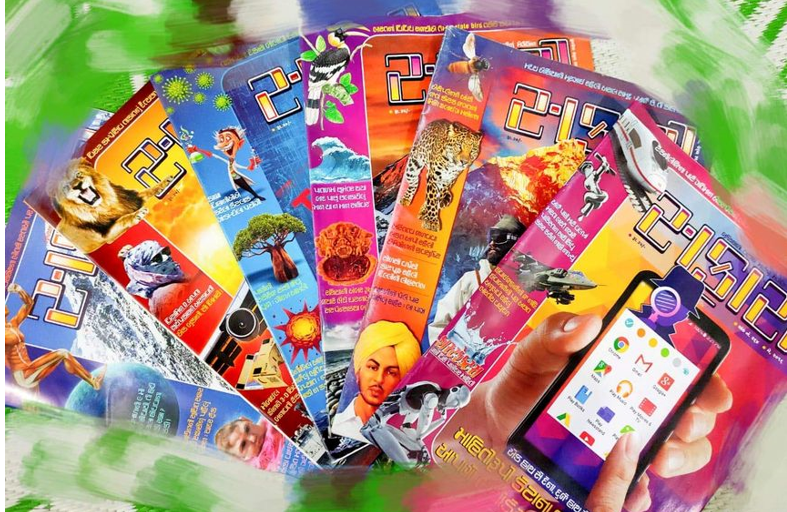
“ I want to write, but I don't have readers .” With this quiet lament, Nagendra Vijay; editor of Safar, announced the end of a magazine that, for over four decades, had faithfully delivered science in Gujarati to curious minds across India. For me, someone who love to finish reading entire issue of safari as soon as it arrives; Its closure is not merely a matter of lost pages but a signal of a much deeper cultural crisis: the erosion of scientific temperament in contemporary India. Safari kept me ahead from my time, I knew about Brahmos in 1997, I knew about Gazi Attack, Iraq evacuations, RAW missions, Massod Missions, Gaza Conflicts, Afghan war etc. before films/series were made on them through safari, Safari covered, history, polity and sociological topics in most engaging and intriguing ways. This magazine played vital role in groming my personality, my career and my thinking pattern. Now I think, what happened to a country that once positioned science at the heart of its nation...

दास्तान - ऐ - Dal Dhokali

Image
While watching interesting culinary history episode of Raja, Rasoi aur Kahaniyan, I shared my observations claiming richness in water, agriculture and migration adds to richness in cuisines of Punjab and Gujarat. As usual, my father clichèd about Gujarati cuisine by naming Dal Dhokli, as the rich cuisine of Gujarat 😉. Though the most neglected recipe, Dal Dhokli holds valuable significance to me as a student of society. When Fields Were Recipes (c. 2000 BCE – 1000 BCE) Let’s go back; way back; to Chalcolithic Gujarat. At Lothal and Rangpur, archaeobotanist find traces of pigeon pea, black gram, wheat, barley, and millet. These weren’t just crops; they were culinary philosophy. The land dictated the menu: protein-rich pulses + carb-dense grains = complete, resilient diet. This ecological pairing seeded what would later become Dal Dhokli. No, it didn’t arrive in a clay pot as dumplings in daal; but the logic was there. The pulse-grain matrix. The blend of sustenance and satiety. Rituals...